Category Archives: Uncategorized

Driven by Money?

By Tom

Never mind the fact that we can’t afford it. And set aside for now the reality that it’s ridiculously complicated and incredibly unfair. The most important question to ask about merit pay is the one we should have asked in the first place: Does it work? Do people actually perform better when they know that the results of their efforts are directly tied to their salary?

Well, apparently not.

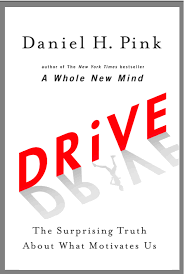
I just finished an outstanding book by Daniel H. Pink called Drive: The Surprising Truth about What Motivates Us. He makes a compelling case that most of us are absolutely not driven by the desire to make money. Especially those of us who work in fields where we’re required to make decisions and solve problems. Like teachers.


Continue reading

Subs and Gerbils

By Tom

This is Teacher Appreciation Week, which means the coffee cart guy will pull up outside our school on Monday and we’ll all get a free espresso drink, courtesy of the PTA. And then on Friday, those same wonderful people will provide us with a delicious sandwich buffet. And between the coffee and the sandwiches we’ll get cute little notes and pictures from our students and maybe an apple-themed mug or two. It‘ll be a great week.

But while we’re being appreciated, I’d like to raise a glass to the teachers who won’t be getting the free coffee and the free lunch; the unsung heroes of the education world: the subs. The folks who take over when we’re sick in bed with the flu or attending a reading workshop in Yakima. The people who let us get our wisdom teeth pulled on a Thursday in November, and let us take our own kids to the doctor on a Monday in March. Or the teacher who takes our class on a field trip across Puget Sound to Blake Island with two hours notice while we were in the Emergency Room having an appendix removed. (Thanks Ms Nelson!)

Subbing is hard work. As Ned, a guy who used to sub a lot in my building put it, “I wanted to be a teacher in the worst way, and now I really am a teacher…in the worst way!”

I should know. I was there. Back in 1984, fresh out of college with the worst interviewing skills in America, I started my career with a phone by my bed in my old room at my parents’ house, waiting for those early-morning calls; telling me to teach second grade in Kent on Monday and high school math in Everett on Tuesday. There were some good experiences and a lot of bad ones. And a few nightmares.

But I’ll never forget the gerbil incident.

Continue reading

Inherited Teachers


C02
By Tracey

I was sitting in a professional development training with my principal, learning about one of those 90/90/90 schools.  You've heard of them:  90% of the students receive free or reduced lunch, 90% of the students are from ethnic minorities, and 90% are passing state tests.  This one, like all of them was also very impressive. The video we watched featured the principal and her approach to turning the school around and making it a
success.  They interviewed the
teachers and showed their collaborative approach to improving instruction based
on student data.  My principal
wants desperately to achieve the third 90 at my school.  She raised her hand and asked, “I want
to know how many of the teachers did the principal hire?  And how many did she inherit?”  My mouth dropped like they did in
cartoons where the cartoon character had to peel his jaw off the ground and
hold it in place to make it look normal. 
I turned to my principal, holding my jaw in place, and we shared an
awkward laugh because she had just revealed to me what I had long
suspected.  I knew what she meant
by “inherited” and I knew which teachers she felt were slowing her down.  I was pretty sure I wasn’t one of them,
even though she “inherited” me.

Continue reading

Where are we going?

A few years ago, I taught a remedial reading class for high school freshmen. They all read four or more years below grade level. At the end of the 9th grade, only two of the twelve left with enough credits to be sophomores, and while they had made up some time, they all still read below grade level. Yet all but one were planning on going to a four-year university, and in the course of one discussion, they all admitted that they would consider themselves failures if they didn’t take that route. Community college, vocational schools, the military… they were all for losers who couldn’t make it.  Four years later, only three of the twelve graduated on time. Did we set them up for feeling like failures by not coaching them about other options that were available?
 
My BFF teaches marketing as part of our high school’s CTE (Career and Technical Education) program. We’ve had many conversations about the 13th year and what we should be preparing kids for. CTE takes a five-pronged approach, where the following options are all considered honorable:
 
4-year degree
2-year degree
Vocational Certificate/Apprenticeship
Paycheck
Military Service
 
The fact is that there are jobs out there for people who have gone through all five of those tracks. Since NCLB was enacted, it has grown more and more difficult to truly prepare kids for any eventuality because with the onset of standardized testing and the push to put every child in college, a lot of good vocational programs that led to immediate job placement in the past are no longer offered at high schools. We stress college to a point that most students don’t even begin to think about other options until it becomes clear that for whatever reason (family need, finances, skill level, lack of motivation), college is not a real option. Now, students who do not go to college right after high school consider themselves failures, even though they might be successfully working in solid jobs.

Should we prepare every kid for the option of college? Absolutely. But should we set them up for failure by teaching them that it is the only good option or even the best option for them?

In Defense of School Lunch

By Tom

Let me start by laying my cards on the table: I eat school lunch every day. And it’s not just because I‘m too lazy to pack my own lunch (which is true) or too poor or too rushed to go out for lunch. (Both of which are also true.)  I actually love the whole school lunch experience: the smells, the lines, the clatter of trays and the bad jokes that my third graders and I tell while we eat. But I especially like the food. Seriously.  

Recently, however, school lunches have come under fire; the most recent attack coming from the military. (Pun intended) Apparently, 27% of Americans between the ages of 17 and 24 are too overweight to join the armed services, which, unless you’re a die-hard pacifist, is discouraging news.  A group of retired generals and admirals who call themselves "Mission: Readiness" wants to combat this trend with more money for more nutritional school lunches. (Their motto: “Fit to Fight!”) They believe that the chief culprit for childhood obesity is the National School Lunch Program and its insidious campaign to stuff our youngsters with bad food.

I disagree.

Continue reading

Field Trips

15By Kristin

I just made copies of the necessary permission slips for an upcoming trip to see Henry V.  I felt a little guilty, because the permission slips have been flying fast and furiously lately.  Students leave school for various competitions, marine biology boat trips, giving talks at the middle schools or simply spending a few periods in the auditorium watching the Thelonious Monk Institute of Jazz play some music.

Given the push to meet academic standards, to the detriment of a lot of other things like P.E., art, music, and voc. ed. classes, are field trips a good thing or bad?  Do they help make up for the fact opportunities have been cut, or do they create problems by taking kids out of the classroom?  I wonder if the increased field trips in my building are an indication that the staff feels these non-academic experiences are an important part of a child's education.  Cut the music program and we'll bring in a jazz performance, we seem to be saying.  Or, maybe it's a backlash to the pressure to meet standards in only a few college-prep subjects at the expense of other learning opportunities.

Continue reading

A Nation Without School Librarians?

Picture 2
 By Tracey

 I want to applaud the school librarians.  You've got to hand it to them for being resourceful.  Have you heard about A Nation Without School Librarians?  It's a collaborative GoogleMap created by a school librarian named Shonda.  Each blue mark represents a place in the country where a certified librarian position has been eliminated.  The red marks places where a librarian is responsible for two or more school library programs.  This project was launched almost a month ago, and as word spreads, more blue and red marks appear.  As our legislature goes home for the 2010 session, our school boards and administrators are meeting to discuss what next to cut.  Is your school library safe?  This map doesn't make me feel hopeful.  I fear that in the next few weeks, as tough decisions about next year's budgets are made, we'll see more red and blue marks appear over Washington.

Continue reading

Should students be paid to achieve?

By Tom

I read a fascinating article in Time magazine last weekend. It was about a Harvard economist named Roland Fryer, Jr., who ran an experiment on a bunch of public school children in which he set out to pay them to achieve in school.  The actual experiment was fairly complicated and somewhat unique in the education world, since he actually used randomized control and experimental groups in hundreds of classrooms in four different cities.

The results were surprising, and again, somewhat complicated; but the bottom line was this: the kids who were paid to do the little things that they could control; things that we all know contribute to long-term success, did far better than the control group, both in the short term and the long term. Second graders, for example, who were paid to read books and answer comprehension quizzes, outperformed their peers by half a grade level on their summative reading test, and their success continued into the following year. On the other hand, the kids who were paid to achieve a long-term goal, like “getting a good grade,” didn’t; presumably because they were “flying blind,” unclear as to what they were specifically supposed to do.

I see three serious implications from this research. The first is uncomfortably obvious: we can get kids to succeed by simply paying them. Like most of you, I find the idea repugnant. I see learning as both an end and a means; being paid to learn is like being paid to visit with your family. But as distasteful as the idea is, you can’t really argue with the results. It apparently works. Fortunately, I suppose, we’ll never have to deal with that moral dilemma, since we can’t even afford to pay the teachers right now.  

Continue reading

Bait and Switch

by Brian99 Bait
 

Fool me once, shame on you; fool me twice, shame on me.

Bush NCLB: Every child will be proficient at reading, writing, and math by 2014.

Obama/Duncan RTTT:  Every child will go to college by 2018.  

The finish line has been moved, but the result will be the same:  in America, all children will be above average.

It's just "The Emperor's New Clothes", over and over again.  The President says he wants legislation on education that will catapult the United States back to the top (by the way, top of what?).  His advisors write a blueprint, which is overwhelmingly approved by Congress (why is that the only bipartisan thing they can do?) and the pundits and CEOs applaud.  While the teachers (see David Cohen's post, and Tom's), who have not been consulted, stand on the sidelines and say the plan is naked.  

In Washington we are being prodded by our governor to endorse our application for Race to the Top funds. She wants all districts to buy in: it will get more points for the application.  The application requires only the signature of the local superintendent, but the state gets more points if the president of the school board, the president of the principal's association, and the president of the local education association also sign. So there will be significant political pressure to sign on; in Delaware and Tennessee, the first round winners, there was 100% district participation.  You will soon be asked if you will support the state's application by having your local association president sign the district's application.

My problem is this:  I will not support the American Idol model for funding education.  Reducing the access to federal funds to a contest is both demeaning and wrong.  Students will be winners or losers without having any role in the process.  Money will be doled out according to grant writers ability, regardless of the needs of students.  

I have no problem with rigorous criteria to qualify for RTTT funds. But I have a problem with a process that is purportedly designed to reward states and districts and teachers that are trying to do the best for their students, but is in reality a contest between state legislatures.  

When they base the process on standards that I can believe in, and will accept the application of every state that agrees to meet those standards, I'm in.

For now, keep the money Arne.

The Best Teacher in America

Images
 

by Brian

Jaime Escalante died last week.  Every math teacher knows who Escalante was, because he was the subject of the inspiring 1988 film "Stand and Deliver."  Fourteen of his students were accused of cheating on the AP Calculus exam in 1982 by the Educational Testing Service.  Twelve of them retook the test under strict supervision and passed again. The reason they were suspected of cheating was not so much the similarity of their answers, but that in their high school, Garfield, 85 percent of the students were low income, most of the parents were
grade-school dropouts, faculty morale was bad, and expectations were low.

Jay Mathews wrote recently about Escalante's teaching. He published a book about him in 1988 titled "Escalante: The Best Teacher in America".  He also writes a blog for The Washington Post called Class Struggle that is well worth checking out.  In the article about Escalante he says: " The stunning success at Garfield led U.S. presidents to endorse
Escalante's view that impoverished children can achieve as much as
affluent kids if they are given enough extra study time and
encouragement to learn".

I have to ask: is that really all there is to it?  Give them extra study time and encouragement?  Because I'm doing that, and it's not working.  The problem seems to be that while I am giving them extra study time, they're not taking it.  And while I encourage them to work hard and get smart, they just don't do the work.

I think what was missed by many in Escalante's wonderful story was that the extra study time was not given, it was mandatory.  He demanded it: three hours after school, and extra time on Saturdays and in the summer.  Remember too that Escalante was there for those extra hours.  (See Mark's post about extra hours.) And the encouragement was often a little sarcastic, which can work in a relationship with a lot of trust, but can also get you in a lot of trouble pretty quickly in this day.  

So what can I do to be like Jaime Escalante?  Because I really do want to be like him.