A Good Teacher in Every Classroom

It seems to me that the whole point of every school reform measure that’s come along within the past 25 years can be distilled into these six words: A Good Teacher in Every Classroom.

It’s a simple mandate, but with several implicit complications. First of all, what do we mean by “a good teacher?” And who gets to decide which teachers are good? And once we decide who’s good and who isn’t, how do we make sure each classroom gets a good one?

Underlying these complications is a fragile balance between job security and accountability. Teachers, like me, tend to lean a little more toward job security at the expense of accountability. We’d rather tolerate the fact that there might be some horrible teachers if it means that our own jobs are relatively secure. Parents, like me, lean more toward accountability; we’re willing to tolerate a few unfairly fired teachers if it means that our own children have zero chance of spending the year with a bad teacher. (That’s right, I’m schizophrenic.)

So what is a good teacher? And who does the labeling? And what do we do after the labeling? These were some of the questions addressed in a recent discussion hosted by Education Sector, featuring three panelists: Scott Thompson from IMPACT, the new teacher evaluation system for the Washington, D.C., public schools; Brad Jupp, senior program adviser for teacher quality initiatives at the U.S. Department of Education; and Jen Mulhern, from the New Teacher Project, who worked with New Haven on their new evaluation system. Ed Sector also wanted to bring the voice of teachers into the discussion, so they included a separate panel with four teacher bloggers, one of whom was me.


Continue reading

The Value of Dialogue

Conversation

In the last two week of school, a decision from higher up was made to test all the students, grades four through six, on their reading fluency.  Someone would show up in my room, armed with their beeping timer, grade level passages, and a class list and start pulling students away, one at a time.  On the second to last day of school I was given the results.  All but three of my students met standard.  Two of the three students had IEPs for reading and were making good progress.  The other student was a slower reader because he “thinks too much” while he reads.  I wasn’t too worried about him not meeting the fluency standard, as he has the most important part of reading down – the comprehension.  I’ll have to admit that I was pleased to get these scores.  All the green highlighted names looked pretty good.  But, let’s not be fooled.  Jordan and several others still can’t decipher the main idea of a paragraph, many of my ELL students don’t have the vocabulary to understand the meaning, and over-confident, yet creative Savannah is still making up her own story to parallel the one written on paper.  I had some struggling readers in this group. 

As I reflect on my year, the year I began blogging and the year even more decisions about my classroom were made for me, I’ve come to appreciate dialogue.  More than once I’ve tried to engage in dialogue about the importance of oral reading fluency and reading comprehension, and each time I’m met with a mantra from our literacy specialist about the research that links oral reading fluency with success in math and reading tests. OK. I don’t discount that there’s a link, but maybe a dialogue about why my fluently reading students aren’t comprehending what they read might be worth our time?  But, as mantras go, the statement is repeated.  There’s no discussion.

Continue reading

Should the Worst Schools Get the Best Teachers?

It’s technically a stupid question, with an answer that ends up eating itself. That’s because the tools we use to measure teachers are the same tools we use to measure schools: test scores. So a bad teacher, by definition, is a teacher whose students are getting low test scores, and a bad school is one with teachers whose students are getting bad test scores. Therefore, the good teachers will always be in the good schools, and vice-versa.

Technically, that is. But we all know that there are good and bad teachers who are good or bad independent of their students’ test scores. If that’s true (and it is) surely it would behoove us to work out a system where the best teachers work with the neediest children, right?

Continue reading

Deadline?

I_love_deadlines_i_like_the_whooshing_sound_t_mousepad-p144187989296858909trak_400 

Our last student day was last Thursday.  After the final test in my first period Algebra class I asked B if he thought he should receive a passing grade.  He had been suspended for 10 days for a bad choice, and had not made up the missed work, or corrected the tests that he had done poorly on.  He said no, he knew he had not done the things he needed to do to pass.  I told him I was sorry, but I agreed.  He had more than enough chances and had not taken advantage of them.

It was also the day my mother died.  It was sudden, but not unexpected. She was 93, and had a wonderful life.  So I rushed through the checkout procedure, turned my grades in and left for Seattle to be with my sister and brother.  When I got back home yesterday I checked my school e-mail and found this message:

Continue reading

Retention: The Schoolyard Rumor

Nelson-muntz.270x

I’m supposed to write on Jordan’s report card that he is promoted to sixth grade.  He shouldn’t be promoted to sixth grade.  He hasn’t done the work at fifth grade.  He reads at a third grade level.  He’s not ready for sixth grade.  Yet, I’m not allowed to make the decision that this child needs a second chance at fifth grade.  I have to promote him because it might hurt him emotionally to not be with his friends.  

I’ve had other students like Jordan before – students who miss a third of the school year, students who don’t try because they’re so far behind as it is, and students who never do the assignments. I feel the same way every time- dread mixed with worry.  I dread having to write the next grade level in the section that reads, next year’s assignment with my signature below, and I worry Jordan will be dropping out of school in the next few years.

Continue reading

My “Paid Vacation”

DSCN2569 copy copy

I’m going to lay all the cards on the table: summer was about 95% of the reason I decided to pursue a job in teaching. The other 5% was that I was earning a BA degree in English literature and that’s not a particularly high-demand field in 2001. I can go on and on about how I care about kids and love seeing them learn and grow. Yes, that’s true, and while that’s the reason I stay in the job it has less to do with my choice to become a teacher than most other young teachers will admit.

Continue reading

Freebird

We were driving home down I-5 a few weeks ago when Freebird came on the radio. So I turned it up, since that’s what you’re supposed to do, and began to sing. There I was, a middle-aged, suburban man, singing Rock and Roll’s quintessential anthem of existential freedom while driving my family of four down the highway in a Dodge Caravan. It didn’t matter; at that moment I was a Freebird.

But apparently the irony wasn’t lost on the ghosts of Lynyrd Skynyrd. For it was at the song’s climatic moment, where all three guitars are going after it full-tilt, that our mini-van’s fuel pump stopped doing that for which it is named. And if those dead old boys had something to do with it, I can’t blame them. We coasted to the shoulder as the song ended. I was no longer a Freebird.

Ten days and a new fuel pump later, I received two messages. One was from our mechanic and the other from my school district’s central office.

Continue reading

And How Did I Do?

To steal from Tom’s post a few days ago, I too wonder “How I did” this school year. Since my evaluation was likewise “satisfactory,” I thought I’d consider the question how a state government might: through test scores.

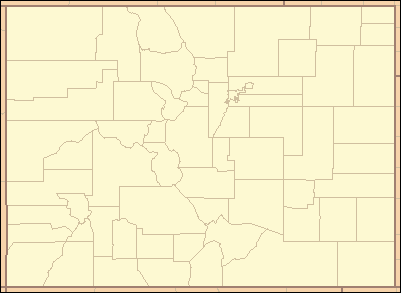
Colorado has joined with a few other states (Florida and New York are among those with plans in motion) to tie a teacher’s continued employment directly to test scores. It appears that student test scores must comprise “at least fifty percent” of the evaluative criteria for teacher tenure and retention. If improvement is not sustained, a teacher can lose tenure and risks being fired. That would certainly align with an “unsatisfactory” review…potentially sparked by poor test scores. 

As I read the article, it stated clearly the bill calls for teachers to demonstrate student growth. I’m not familiar with the Colorado assessment system, and a half hour of wading through the web didn’t net me many answers. I’m a skeptic of that word growth, however. Something tells me we’re not talking about a preassessment in September and a postassessment in June, which is the only kind of assessment of growth I’d feel comfortable tying to teacher pay and continued employment. The old argument of comparing apples to apples is key. If we’re comparing apples to oranges, then ready the court for appeals.*

In a once-a-year test situation, how can growth be assessed? Let’s trace it out and play the how I did game by considering my students’ performance on the recent High School Proficiency Exams (HSPE) in reading and writing and previous years’ Washington Assessment of Student Learning (WASL) tests.

Continue reading

Sufficient versus Proficient

Z698SK

For my English 9 Final exam, my freshmen were to write a literary analysis essay which compares the stages of the archetypal hero’s journey in Homer’s Odyssey with the corresponding stages in a recent film of their choice. Simply placing the two side by side was not enough–they had to actually deconstruct and analyze. They had to cite text evidence and learn to paraphrase scenes from the film in order to use specifics to support their comparisons. They had to draw inferences, seek common threads, and extend those threads beyond art into the universal truths revealed by the archetypal hero and his journey.

All last week, we did prewriting activities in class, reviewed effective introductions and conclusions, practiced paragraphing, paraphrasing, transitions and analytical commentaries. We discussed how to select evidence to support a proposition, and we examined old drafts of past assignments. These skills, this thinking, is what we’ve practiced all school year.

Monday, during the two-hour block, the students were provided computers to word-process and polish their final drafts, based on their hand-written notes. 

I told them my expectations were high. I told them that A’s would be rare, that I would be hard to please. I asked if they felt prepared for the challenge, and they said yes. And then they did something that startled me.

Continue reading

How’d I do?

Last week I had my end-of-the-year evaluation. I walked into my principal’s office, closed the door and discussed my progress on the goals we had set forth back in September. And when all was said and done, I found out that I am “satisfactory.” What a relief.

Actually, in my district, as in most, you have to be pretty bad to be “unsatisfactory,” and “satisfactory” is as good as you can get, which can leave most of us who have a stake in the teacher evaluation system feeling somewhat, well…unsatisfied.

Continue reading