Management

4YLXZa  By Mark

I've managed to have a pretty successful career so far. I've earned some awards, National Certification, recognition. Like many of us, I have those kids that come back and call me their favorite teacher, sometimes offering unfair or unkind comparisons to subsequent teachers who the student disliked. But I've had an internal struggle about where my success is rooted, mainly because I am, without contest, the least well-read English teacher (let alone department chair) to ever hold the title. In lofty discussions on the fringes of department meetings or around the lunch table, when the topic turns to high literature, grand philosophy, or big names, if I don't physically retreat, I do so into my own little mind hoping and praying no one asks for my ideas on the Bacon/Shakespeare authorship debate or what I think about hermeneutics or philology.

Sure, I managed to get a degree in English from a university. But I only read what was assigned–and though I did so with dedication and interest–I've never really been a bookworm, even though I am a strong proponent of helping my students channel their inner bookworm. What I do think makes me an effective teacher seems to appear nowhere on any of the rubrics or standards for effective teaching. When I did my National Boards, it wasn't there. When I look at models of merit pay, its not there. Aside form the rubrics by which my recent student-teacher was assessed (and even there it was vague), I've not seen it anywhere.
Continue reading

The Burden of Leaving No Child Behind

Photo0278 By Kristin

I understand the urge to compare the best charter school to an average public school and then argue that if one can work miracles, the other should be able to.  And I understand that if a bright-eyed Princeton graduate can go down into the depths of Mississippi and get her second graders to read Antigone – and love it – then I should be able to get my habitually-truant tenth grade gang-banger to pass the state assessment.  So, to be clear with where I stand on things, I support the push to evaluate schools and make sure they're effective at what they do.

But let's be honest.  Most public schools don't have the luxury of focusing solely on academics.  I hear a lot about how we're the wealthiest nation and yet we have high school juniors who can't write well, but I don't hear enough about the fact we have children who, because of catastrophic brain damage or learning deficits, spend their days in a safe, engaging, therapeutic environment paid for with tax dollars.  These are tax dollars set aside for public education, but really they're spent on the kind of education that doesn't match up to Race to the Top values.  I think Arne Duncan, Jon Schnur and Wendy Kopp should remember that the role of public education doesn't begin and end with academics.

Continue reading

How to Handle This One? (Westboro Baptist Church)

DZdreV

By Mark


A friend of mine in Clark County (Washington) sent me this link
from the local newspaper
 which details that the Westboro
Baptist Church, a Kansas-based group known for its frequent anti-gay protests
as well as protests at military funerals, will be targeting a school in the
district neighboring hers.


From the article:

No one’s sure why the Orchards school was singled out for a
30-minute demonstration, which would be the notorious group’s first in Clark
County… Early June 1, the group will picket Portland’s Grant High School
before the first bell, the [Westboro Baptist Church] website shows. That
same day, it will gather at Heritage from 2:15 to 2:45 p.m., chiefly “to picket
the rebellious brats and lying teachers,” the website explains.

I'm curious to see how the school, and the students, handle
this "constitutionally protected exercise of free speech." If you
knew this group was coming to your school, how would you recommend that your
school, students, and community respond? 

And there are so many other questions I'd love to ask…but
this blog is probably not the appropriate forum for them…so let's focus on
how teachers, administrators, students, and the community can best respond to
this provocative and potentially volatile situation.

Racing to the Trough?

by Brian
Pig_trough
 

Today the drumbeat continued to have school districts in Washington sign the state application for The Race to the Top funds.  In the Seattle Times, Brad Smith of the Washington Roundtable writes: "By making a strong show of support for Washington's application today,
districts increase their chances to receive additional funding for
reforms they will need to implement tomorrow."

A Tacoma News Tribune editorial writer encouraged districts to sign the RTTT application, and applauded the Peninsula School District, saying: "So don’t count Peninsula among the districts that can’t be bothered to
accept a check for improving their instruction."

But the Columbian struck a different tone in their editorial: In our view: 'Race to the Trough'? They quote La Center Superintendent Mark Mansell as saying, “Any time you chase money
and not an idea, it’s not meaningful change. It has no real impact.
That’s the thing that makes me really, really upset about this. We’re
chasing after the money.”

Continue reading

Driven by Money?

By Tom

Never mind the fact that we can’t afford it. And set aside for now the reality that it’s ridiculously complicated and incredibly unfair. The most important question to ask about merit pay is the one we should have asked in the first place: Does it work? Do people actually perform better when they know that the results of their efforts are directly tied to their salary?

Well, apparently not.

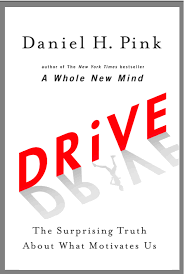
I just finished an outstanding book by Daniel H. Pink called Drive: The Surprising Truth about What Motivates Us. He makes a compelling case that most of us are absolutely not driven by the desire to make money. Especially those of us who work in fields where we’re required to make decisions and solve problems. Like teachers.

Continue reading

Tech Guru, Tech Skeptic

Ibm_pc-jr  By Mark

I've inadvertently, and inexplicably, become a guru of sorts. I sometimes feel like I barely have myself figured out–but nonetheless, my willingness to experiment with technology and use it in my instruction has led other to seek me out for advice. The dirty little secret? Most the time those confident answers I offer are simply my willingness to offer conjecture and speak it with authority–I have no special training to back it up other than the time I spend on my own just playing with these "cool toys." 

The dirtier little secret? When it comes to incorporating technology into the classroom, I may be computer savvy and a digital native, but more than that I'm a technology skeptic.

Too often, when I see technology for the classroom, I only see ways to go the long way about accomplishing a goal which could have reasonably been accomplished "the old-fashioned way." (Full disclosure: I'm a 31-year-old education blogger who came of age with the internet…so I may be entering my curmudgeonly years a little early.)  

Continue reading

Subs and Gerbils

By Tom

This is Teacher Appreciation Week, which means the coffee cart guy will pull up outside our school on Monday and we’ll all get a free espresso drink, courtesy of the PTA. And then on Friday, those same wonderful people will provide us with a delicious sandwich buffet. And between the coffee and the sandwiches we’ll get cute little notes and pictures from our students and maybe an apple-themed mug or two. It‘ll be a great week.

But while we’re being appreciated, I’d like to raise a glass to the teachers who won’t be getting the free coffee and the free lunch; the unsung heroes of the education world: the subs. The folks who take over when we’re sick in bed with the flu or attending a reading workshop in Yakima. The people who let us get our wisdom teeth pulled on a Thursday in November, and let us take our own kids to the doctor on a Monday in March. Or the teacher who takes our class on a field trip across Puget Sound to Blake Island with two hours notice while we were in the Emergency Room having an appendix removed. (Thanks Ms Nelson!)

Subbing is hard work. As Ned, a guy who used to sub a lot in my building put it, “I wanted to be a teacher in the worst way, and now I really am a teacher…in the worst way!”

I should know. I was there. Back in 1984, fresh out of college with the worst interviewing skills in America, I started my career with a phone by my bed in my old room at my parents’ house, waiting for those early-morning calls; telling me to teach second grade in Kent on Monday and high school math in Everett on Tuesday. There were some good experiences and a lot of bad ones. And a few nightmares.

But I’ll never forget the gerbil incident.

Continue reading

Inherited Teachers


C02
By Tracey

I was sitting in a professional development training with my principal, learning about one of those 90/90/90 schools.  You've heard of them:  90% of the students receive free or reduced lunch, 90% of the students are from ethnic minorities, and 90% are passing state tests.  This one, like all of them was also very impressive. The video we watched featured the principal and her approach to turning the school around and making it a
success.  They interviewed the
teachers and showed their collaborative approach to improving instruction based
on student data.  My principal
wants desperately to achieve the third 90 at my school.  She raised her hand and asked, “I want
to know how many of the teachers did the principal hire?  And how many did she inherit?”  My mouth dropped like they did in
cartoons where the cartoon character had to peel his jaw off the ground and
hold it in place to make it look normal. 
I turned to my principal, holding my jaw in place, and we shared an
awkward laugh because she had just revealed to me what I had long
suspected.  I knew what she meant
by “inherited” and I knew which teachers she felt were slowing her down.  I was pretty sure I wasn’t one of them,
even though she “inherited” me.

Continue reading

Where are we going?

A few years ago, I taught a remedial reading class for high school freshmen. They all read four or more years below grade level. At the end of the 9th grade, only two of the twelve left with enough credits to be sophomores, and while they had made up some time, they all still read below grade level. Yet all but one were planning on going to a four-year university, and in the course of one discussion, they all admitted that they would consider themselves failures if they didn’t take that route. Community college, vocational schools, the military… they were all for losers who couldn’t make it.  Four years later, only three of the twelve graduated on time. Did we set them up for feeling like failures by not coaching them about other options that were available?
 
My BFF teaches marketing as part of our high school’s CTE (Career and Technical Education) program. We’ve had many conversations about the 13th year and what we should be preparing kids for. CTE takes a five-pronged approach, where the following options are all considered honorable:
 
4-year degree
2-year degree
Vocational Certificate/Apprenticeship
Paycheck
Military Service
 
The fact is that there are jobs out there for people who have gone through all five of those tracks. Since NCLB was enacted, it has grown more and more difficult to truly prepare kids for any eventuality because with the onset of standardized testing and the push to put every child in college, a lot of good vocational programs that led to immediate job placement in the past are no longer offered at high schools. We stress college to a point that most students don’t even begin to think about other options until it becomes clear that for whatever reason (family need, finances, skill level, lack of motivation), college is not a real option. Now, students who do not go to college right after high school consider themselves failures, even though they might be successfully working in solid jobs.

Should we prepare every kid for the option of college? Absolutely. But should we set them up for failure by teaching them that it is the only good option or even the best option for them?

In Defense of School Lunch

By Tom

Let me start by laying my cards on the table: I eat school lunch every day. And it’s not just because I‘m too lazy to pack my own lunch (which is true) or too poor or too rushed to go out for lunch. (Both of which are also true.)  I actually love the whole school lunch experience: the smells, the lines, the clatter of trays and the bad jokes that my third graders and I tell while we eat. But I especially like the food. Seriously.  

Recently, however, school lunches have come under fire; the most recent attack coming from the military. (Pun intended) Apparently, 27% of Americans between the ages of 17 and 24 are too overweight to join the armed services, which, unless you’re a die-hard pacifist, is discouraging news.  A group of retired generals and admirals who call themselves "Mission: Readiness" wants to combat this trend with more money for more nutritional school lunches. (Their motto: “Fit to Fight!”) They believe that the chief culprit for childhood obesity is the National School Lunch Program and its insidious campaign to stuff our youngsters with bad food.

I disagree.

Continue reading