My teacher leadership journey has evolved from an inability to say no to a training, a committee, or an extra responsibility, into an ongoing urge to seek out new and innovative opportunities for learning. It’s not a journey that suits everyone, but, for me, constant growth and learning is as integral as the air I breathe. So, I keep looking for the next teacher leadership opportunity around the bend.
This summer I received the news that I was chosen for the Fulbright Teachers for Global Classrooms program (TGC). This wonderful opportunity will allow me and my cohort of 75 other teachers around the country to travel next spring to visit teachers overseas. Of course, I’m thrilled! I am always looking for ways to broaden my horizons as a teacher, and going “global” seems like the ultimate leap forward.
The program requires me to complete a course of study in global competence in the classroom, and, one week in, I am completely blown away. I feel like a whole world of teaching skills and strategies has opened up to me. I feel both validated in my beliefs as a teacher and severely challenged in my methods. It’s, well, a sea change for me.
Let me catch you up. I will use elements from ASCD’s Global Competent Learning Continuum to explain. This is a rubric that measures a teacher’s global competencies. You can explore the full continuum here.
Teacher Dispositions
1. Empathy and valuing multiple perspectives
2. Commitment to promoting equity worldwide
When it comes to the the dispositions outlined by the continuum, I find myself approaching “proficient.” That means that I see myself as actively recognizing biases and the limitations of my own and others’ perspectives. Also, I actively engage in activities that address inequities, often challenging myself and others to seek change at a local or regional level. I felt pretty good about this area, although I could see that to become advanced in a global teaching disposition, I would have to lead others to value diverse perspectives and act on issues of inequity. I need to step up my game.
Teacher Knowledge
3. Understanding of global conditions and current events
4. Understanding of the ways that the world is interconnected
5. Experiential understanding of multiple cultures
6. Understanding of intercultural communication
In the area of Teacher Knowledge, I am approaching proficient as well. I pride myself on being educated and aware, of pursuing knowledge and understanding of history, current events, and social issues. However, I recognize a glaring weakness in my competency. I don’t see myself as capable of change or leadership beyond a local level. Even though I tell my students that they can enact change, that they have the power to create a better future for themselves and our world, I am not walking the walk. I merely talk the talk. Continue reading

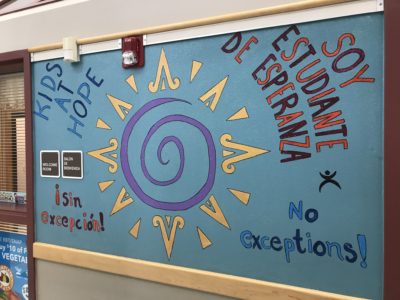 The Office of the Superintendent of Public Instruction recently convened a task force for the purpose of expanding
 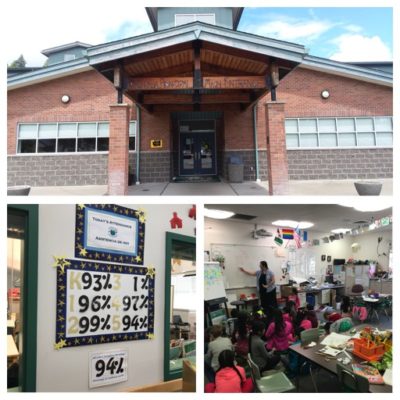 One program in particular, though, serves as a model for the potential outcomes of successfully implementing dual language throughout a school –
 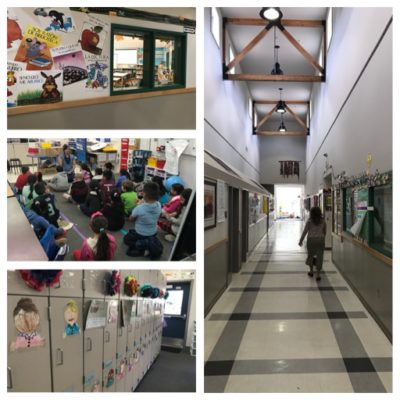 I had the pleasure of meeting the pre-school teacher, Celia Butler. She is from Columbia. Her passion was clear from the moment I walked into her classroom and her connection with her students was inspiring. She greeted her students in English and in Spanish and had a room rich in color and in language. Each tiny student who came in, greeted their teacher with “Good Morning” and a hug. There was love in her classroom – an uplifting community to get them started on there journey through school. This classroom is representative of all the classrooms in this school. This in and of itself shows the community and engagement in a dual language environment.
 “Two things that are going well and one problem you would like to see changed. You must write a solution to the problem – otherwise you are simply complaining. Complaining in life will get you nowhere. Finding solutions to your problems will get you everywhere. Never forget the farmer! Go!”
 I am passionate about my students and providing them with every opportunity to advance toward a happy and fulfilling future. For most this means graduating from high school and going on to some sort of post-secondary education. One requirement which can be a hurdle for them is world language. Most universities require students to take 2 years of a foreign language. For my students, English is their foreign language, so studying a language on top of English can be daunting. Over the past two years, though, Washington state has introduced the option to show language proficiency through a
  Based on my research, it would appear that one major hurdle for Native American students to study and receive credit for their indigenous languages is a lack of qualified and fluent educators to teach the courses and/or to score the exams. Robert Wynecoop and Jamie Valadez are in the minority as highly qualified educators who are also fluent in their respective indigenous languages. However, this is no fault of the individual tribes. For centuries Native Americans have faced the systematic dismantling of their cultures. Throughout the 19th and 20th centuries Native American children were sent to boarding schools in an attempt to force them to assimilate to white culture, in an effort to “
 I’m currently struggling with such a dilemma. Our district is strenghtening its retention policy to discourage a rapid uptick in junior high students with failing grades. The majority of district staff believe that if our policy has more “teeth,” if we actually retain more students, then others will work harder. This issue strikes a very harsh chord with me, and it’s personal.